The Unthinkable: Losing an Entire Data Center Region in an Instant
Disaster preparedness isn't optional for hyperscale infrastructure. Hurricanes, wildfires, grid failures — these aren't hypotheticals. Meta's data centers (DCs) face them all. While early warning systems and gradual mitigation strategies work when you have hours of notice, what happens when the lights go out instantly? No warning. No graceful shutdown. Just black.
This is the reality Meta's infrastructure team had to confront. The result? Instantaneous PowerLoss Storm — a new testing paradigm within their long-established Disaster Readiness (DR) "Storm" program. It's the ultimate safety net for zero-notice power loss across an entire DC region.
Reference: This article is based on Meta Engineering's deep dive into their instant power loss validation strategy. Source: Meta Engineering Blog
Building Tolerance from the Ground Up
Handling instant power loss isn't a bolt-on fix. It had to be architected into every layer of the DC stack:
- Mechanical & Electrical facilities – hardware-level fail-safes
- Server racks – battery-backed persistence and Power Loss Siren (PLS) for in-memory data survival
- Storage & Compute – region-wide asynchronous signaling via Unavailability Events (UEs)
- Twine orchestrator – the container orchestration layer that coordinates millions of services
These capabilities were already battle-tested on singular fault domains (a single rack, a single building). But an entire region? That's 50–60x larger. That's where the real problems began.
The Circular Dependency Nightmare (Ouroboros)
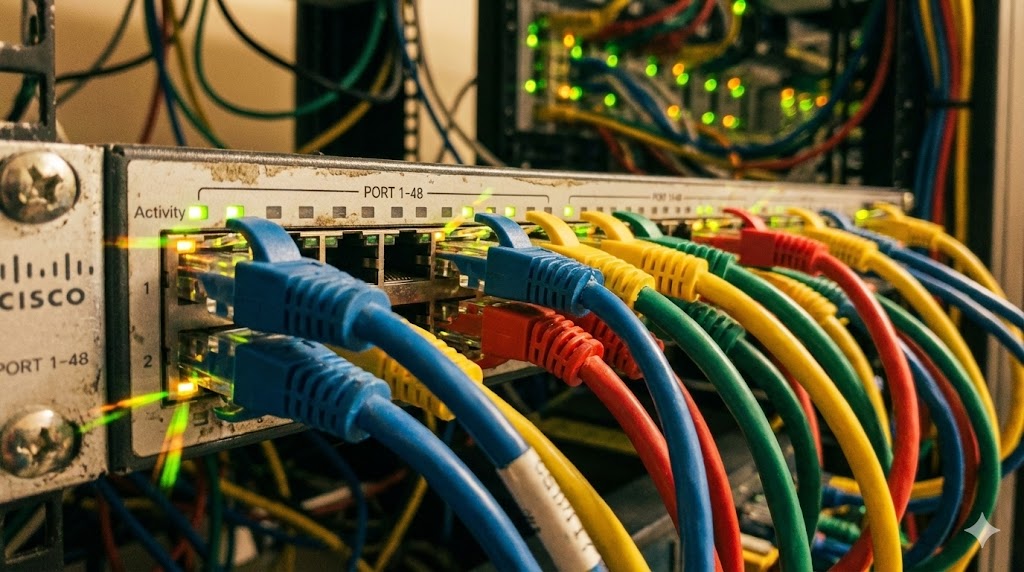
When you power off an entire region and try to boot it back up, you face a chicken-and-egg problem: the orchestrator needs to start its own control plane services before it can start anything else. But those control plane services depend on the orchestrator itself.
# Simplified illustration of circular dependency risk during bootstrapping
# This is NOT Meta's actual code, but demonstrates the concept

class TwineOrchestrator:
    def __init__(self):
        self.scheduler = None
        self.allocator = None
        self.broker = None
        self.zelos = None  # coordinator

    def bootstrap_region(self):
        # Problem: Scheduler needs Allocator, Allocator needs Broker,
        # Broker needs Scheduler -> circular!
        # Without a resolved startup order, nothing starts.
        if not self.scheduler or not self.allocator:
            raise RuntimeError("Circular dependency detected: cannot bootstrap")
        # ... proceed with service startup
Meta solved this with a two-pronged approach:
- Belljar tests in CI/CD pipelines – continuously detect and eliminate dependency risks before they reach production.
- Twine Recovery Kit (Twrko) – a purpose-built "jumpstart" capability to break any circular dependencies that slip through.
Together, Belljar + Twrko put the ouroboros to rest.
The Boomerang Problem
A subtler issue: the Unavailability Events (UEs) used to orchestrate shutdown and recovery of services were themselves shutting down the orchestrator control plane. Result? Orphaned services that never received a UE — they just hung there, unreachable.
# Configuration snippet illustrating the solution:
# Control plane services ignore power-related UEs
services:
  - name: scheduler
    ignore_power_ues: true  # prevents self-shutdown
  - name: allocator
    ignore_power_ues: true
  - name: broker
    ignore_power_ues: true
Simple, sustainable, and effective.
Tradeoffs: Reliability vs. Velocity
You could build watertight tolerance to instant power loss. But at what cost? Overengineering introduces its own risks — false positives, slower infrastructure velocity, and opportunity costs.
Table-stakes requirements (must avoid):
| Requirement | Why it's non-negotiable |
|---|---|
| Data loss of storage/database systems | Permanent data loss = unacceptable |
| Permanent damage to DC facilities | Hardware replacement costs + downtime |
| Sustained impact beyond a single region | Cascading failures = global outage |
Tolerable risks:
- Transient service errors (within threshold)
- Rack failures (under predefined limits)
- Bounded staleness in service routing tables
- Bounded staleness in region unavailability detection (asynchronous systems have inherent latency)
The key insight: only issues that can't be mitigated through post-incident remediation within a reasonable MTTR fall outside the boundary of tolerable impact.
Validation: The Real Test
You can't just simulate this. Meta had to de-energize a large production region. To solve the chicken-and-egg problem of needing to take risk to address risk, they used an incremental approach:
- Shadow regions – replicate production without touching live traffic
- Newest/smallest production regions – limited blast radius
- Large production regions – housing critical storage, AI, and data warehouse workloads
At each step, they injected a power supply fault causing immediate de-energization. No preemptive actions. True surprise.
Limitations and Cautions
- Not a silver bullet: This paradigm is specific to hyperscale DCs with redundant power architectures. Small-scale deployments may not benefit.
- Cost: Building battery-backed persistence, region-wide signaling, and recovery tooling is expensive. Only justified for mission-critical infrastructure.
- False positives risk: Over-engineering tolerance can introduce bugs in regular operations.
- Asynchronous signaling limits: Region unavailability detection is inherently bounded by network latency.
Next Steps: Learning and Scaling
Meta is now adopting the same incremental strategy toward validating regions with live client traffic against instantaneous failures. They're also continuously revisiting tradeoffs as AI workloads and capacity demands grow.
For engineers working on distributed systems, the core lesson is universal: reliability and velocity are two sides of the same coin. You can't have one without the other.
Recommended Reading
- Meta's open source collaboration at scale: Deprecating the internal FFmpeg fork
- Bridging AI and Medicine: Claude in Microsoft Foundry unlocks domain-specific capabilities

Conclusion: Slow is Smooth. Smooth is Fast.
Meta's Instantaneous PowerLoss Storm isn't just a testing framework — it's a philosophy. By accepting that failures will happen without warning, and building tolerance from the ground up, they've created an infrastructure that can recover from the unthinkable.
For your own systems: start small. Test single fault domains. Then scale. The principles of defense-in-depth, dependency analysis, and incremental validation apply whether you're running 10 servers or 10,000.
Key takeaway: The ability to recover from instantaneous failure isn't a luxury. It's a foundation for innovation.