The Shift Nobody Budgeted For
For most of the last decade, modernization was the tax you paid before you were allowed to innovate. Legacy .NET Framework apps, aging Java runtimes, and accumulated CVE debt sat in the "we'll get to it" backlog while teams shipped features on top of them. Gartner's inaugural 2026 Magic Quadrant for AI-Augmented Code Modernization Tools is essentially the analyst world admitting that math no longer works.
The premise is simple: agentic AI changes the cost curve of modernization from months of manual effort to days of guided automation. Microsoft landed as a Leader in this first edition—but the more interesting story for working developers is what the underlying tooling (GitHub Copilot modernization) actually does, and where the marketing narrative and the engineering reality diverge.
근거자료: Microsoft Azure Blog – Microsoft named a Leader in the 2026 Gartner Magic Quadrant
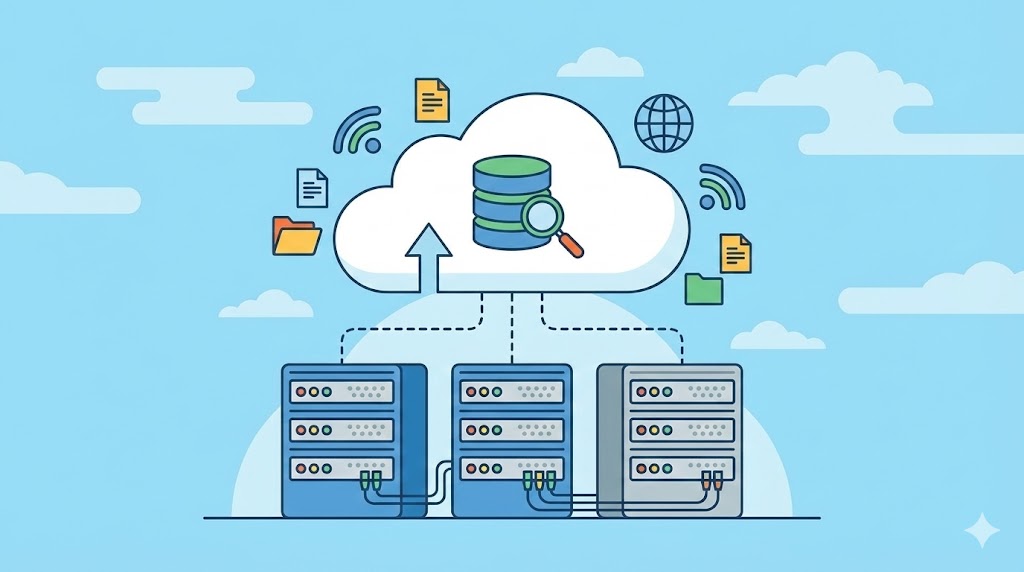
If you've been following how hyperscalers are rethinking data and discovery layers at scale, this is the same pattern applied to the codebase itself—treating legacy as a queryable, transformable graph rather than a monolith.
How Agentic Modernization Actually Works
The architecture Microsoft describes has two layers, and understanding the split matters because it maps directly to how you'd structure your own migration pipeline.
Layer 1: The Modernization Agent (Orchestration)
Exposed via a Modernize CLI, this layer handles portfolio-level work: assessment, planning, and framework-upgrade automation across many applications at once. Think of it as the CI/CD brain for migrations.
# Example: assess a legacy .NET Framework solution at portfolio scale
modernize assess \
  --source ./legacy-solutions \
  --target azure \
  --output plan.json

# Generate per-application upgrade plans from the assessment
modernize plan \
  --input plan.json \
  --framework net8.0 \
  --output ./plans/
Layer 2: In-IDE Execution (GitHub Copilot)
Inside the IDE, Copilot executes those plans: runtime upgrades, dependency migration to Azure services (Key Vault, Blob Storage, Entra ID), IaC generation, and deployment. The critical design constraint is that every recommendation is reviewable and validated against your own tests and pipelines—not against a black-box model's opinion.
# Example: a reusable custom skill definition (pseudo-schema)
skill: adopt-managed-identity
applies_to:
  - "**/*.csproj"
  - "**/appsettings*.json"
transform:
  - replace: "connection_string"
    with: "ManagedIdentityCredential"
  - add_package: "Azure.Identity"
validation:
  - run: "dotnet test"
  - scan: "cve"
The custom skills mechanism is arguably the most underrated part: it lets a team encode its own proven migration patterns as reusable, versioned tasks—so institutional knowledge survives turnover instead of walking out the door.
The Reality Check: Where This Still Hurts
Let's separate the numbers from the caveats.
| Claim | What It Really Means | Caveat |
|---|---|---|
| "Up to 70% less time on migration" | Measured on repetitive, pattern-matching work (framework bumps, dependency swaps) | Custom business logic and undocumented behavior still need humans |
| "500,000 lines of code in weeks" | Achievable on well-tested codebases with clear boundaries | Legacy code with no test coverage is a different beast entirely |
| "1.4M+ developers installed" | Install ≠ adoption; usage depth varies wildly | Enterprise rollout still requires governance and training |
| "Spans .NET, Java, C++, Python" | Coverage exists, but depth is uneven | C++ modernization is far less mature than .NET/Java paths |
The Limits You Should Plan For
- Test coverage is the real gate. Agentic tools validate against your tests. If you have none, the "reviewable change" promise is hollow.
- Vendor gravity is real. Landing on Azure App Service / AKS / Container Apps is the destination. That's fine if Azure is your target—less fine if you're multi-cloud or on-prem.
- "Modernization in days" is a portfolio-scale claim, not a per-app guarantee. A single gnarly monolith with 15 years of tribal knowledge won't magically resolve in a sprint.
- Security scanning is post-upgrade, not pre-design. CVE scanning after migration is valuable, but it doesn't fix architectural security debt.
If you're interested in how large-scale systems handle migration and discovery at billions-of-users scale, the Friend Bubbles social discovery architecture deep dive is a useful parallel case study in scaling decisions under pressure.

What to Do Next (Without Drinking the Kool-Aid)
This week: Pick one legacy application with decent test coverage. Run an assessment. Don't commit to a migration—just see what the tooling surfaces. The value of the assessment step alone (dependency graph, CVE inventory, framework drift) is often worth the effort.
This quarter: If assessment looks sane, encode one proven migration pattern as a custom skill. Measure whether it actually reduces review time—not just generation time. Generation speed is table stakes; reviewable speed is the real metric.
Learning path:
- Understand the agentic orchestration model (CLI → IDE handoff) before adopting it.
- Invest in test coverage first—it's the validation substrate for every AI-generated change.
- Study how other hyperscalers structure large-scale migrations; the Netflix RDG gRPC query architecture is a good example of how deep architectural rethinks pay off.
The Gartner recognition is a signal that the category is real. But the tooling is only as good as the engineering discipline around it. Modernize one app. Measure honestly. Then scale.