The Shift from Reactive to Proactive
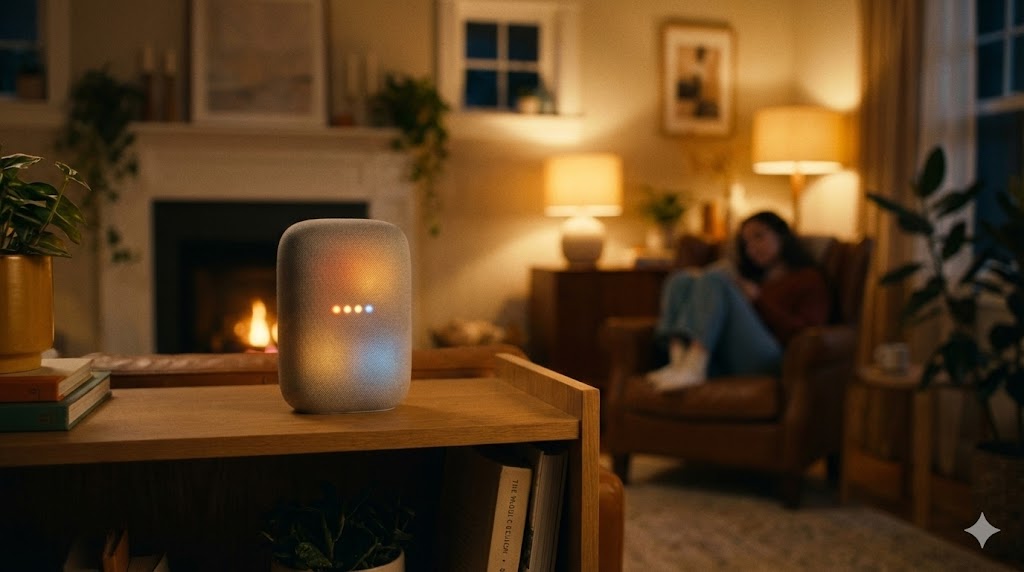
At Google I/O 2026, the company announced a major pivot for its smart home strategy: Gemini for Home is no longer just a voice assistant upgrade — it's a full-stack AI platform. The core idea is simple but powerful: instead of waiting for a user to say "Hey Google, turn on the lights," the home itself can now act proactively — detecting anomalies, anticipating needs, and even coordinating with emergency services.
This isn't just a feature update. It's a business model transformation. By opening the Google Home APIs (which already control hundreds of millions of devices) to third-party service providers and hardware manufacturers, Google is enabling a new category of "agentic home services." Think of it as the difference between a dumb thermostat and a smart HVAC system that learns your schedule, checks weather forecasts, and pre-cools your house before a heatwave — all without you lifting a finger.
Source: Google Developers Blog
Three Core Capabilities
Google built this transformation on three pillars:
- Agentic AI Layer — The Gemini model now has persistent context and can execute multi-step tasks across devices. For example, if a smoke detector goes off, the system can turn on lights, unlock doors, and send a notification to your phone — all autonomously.
- Open APIs for Service Providers — Carriers, ISPs, and security companies can integrate these capabilities directly into their own apps. AT&T's Connected Life app is already using this to combine Google's camera intelligence with their LTE backup for a robust security solution.
- Hardware Turnkey Program — The "Gemini Built In" program provides fully validated reference designs (SOCs, sensors, mics) from partners like Amlogic, SEI Robotics, and Apical, allowing hardware makers to skip years of R&D.
What This Means for Developers & Partners
If you're a developer working on IoT or smart home solutions, this is a massive opportunity. Here's the practical takeaway:
- Monetizable Services: You can now build subscription-based proactive services on top of Google's infrastructure. For example, a property management company could offer an AI-driven maintenance service that detects water leaks and automatically schedules repairs.
- Reduced Time to Market: With the reference hardware designs and pre-integrated APIs, you can go from concept to production in months, not years.
- Brand Extension: Hardware partners can maintain their own brand identity while leveraging Google's AI stack — a model that's worked well for Android.
Technical Considerations & Caveats
Before you jump in, there are a few things to keep in mind:
- Privacy & Data Governance: Proactive AI means the system is constantly analyzing sensor data. Make sure your service complies with local regulations (GDPR in Europe, LGPD in Brazil, CCPA in California). Google has promised on-device processing for sensitive tasks, but check the fine print.
- Latency & Reliability: Agentic actions require near-real-time decision-making. If your service depends on cloud inference, network outages could be a problem. Consider hybrid architectures that run critical models locally.
- Vendor Lock-in Risk: While the APIs are open, the core AI is tied to Google's infrastructure. For enterprises that value multi-cloud flexibility, this might be a concern. A good pattern is to abstract the AI layer behind a unified API so you can swap providers later.
Next Steps: How to Get Started
- Sign up for the developer program — Google is offering early access to the Gemini for Home APIs. Use the link in the original announcement to join the waitlist.
- Explore the Google Home APIs — Start by reading the documentation on how to connect devices and trigger actions. The same APIs used by Google's own apps are now available to you.
- Prototype a proactive service — Think about a common pain point in your industry (e.g., elderly care, property management, energy efficiency) and build a simple proof-of-concept that uses Gemini's agentic capabilities.
For a deeper dive into how agentic architectures can transform industries, check out this related article on Multi-Agent Architecture for Intelligent Advertising. And if you're curious about how Microsoft's stack compares, see our analysis on Agentic AI for Modernization with Azure and GitHub Copilot.
The Bottom Line
Google Home's evolution from a smart speaker to an agentic platform is a clear signal: the future of IoT is not about more devices — it's about smarter, autonomous coordination between them. For service providers and hardware makers, the window to build on this platform is now. The tools are open, the reference designs are ready, and the market is waiting.
Code Example: Simulating a Proactive Alert with Google Home APIs
Below is a conceptual example (using Python) of how a service provider might listen for a smoke detector event and trigger a multi-step response via the Google Home API.
import requests
from google_home_api import HomeClient  # hypothetical SDK

# Initialize client with service account credentials
client = HomeClient(credentials="path/to/service-account.json")

# Define the proactive response logic
def handle_smoke_event(device_id, event_data):
    # Step 1: Turn on all lights in the home
    client.execute_command(device_id, "light", action="turn_on", params={"brightness": 100})

    # Step 2: Unlock front door for emergency exit
    client.execute_command(device_id, "lock", action="unlock")

    # Step 3: Send push notification to homeowner
    notification_payload = {
        "title": "🔥 Smoke Detected!",
        "body": "Emergency lights turned on. Front door unlocked. Fire department notified.",
        "priority": "high"
    }
    client.send_notification(user_id="user_123", payload=notification_payload)

    # Step 4: Optionally call emergency services via API
    # (pseudo-code — actual implementation depends on local regulations)
    emergency_api = EmergencyServiceClient(api_key="your-key")
    emergency_api.dispatch(
        location=event_data["home_address"],
        incident_type="fire",
        details="Smoke detected in kitchen area"
    )

    print(f"Agentic response triggered for device {device_id}")

# Register a webhook for smoke detector events
client.register_event_handler("smoke_detected", handle_smoke_event)
Note: This is a simplified illustration. Real-world implementations would need to handle authentication, rate limiting, and fallback logic.
Limitations & Watchpoints
- On-Device vs. Cloud: For critical safety actions (like unlocking doors), you'll want to ensure the system works even without internet. Google's reference designs include local processing capabilities, but verify the latency guarantees.
- Multi-Vendor Interoperability: The Google Home APIs work best with devices that support Google's Matter and Thread standards. Legacy Zigbee/Z-Wave devices may require a bridge.
- Service Pricing: Google will take a cut of subscription revenue (similar to the Google Play model). Factor this into your business plan.
Further Learning
- Google Home API documentation (official)
- Google I/O 2026 session videos on io.google
- Community examples on GitHub: search for "google-home-api" or "gemini-home"
For a strategic perspective on how agentic AI is reshaping cloud services, don't miss our companion piece on Azure and GitHub Copilot's approach.

Conclusion: The Home That Cares for You
Google's vision for Gemini for Home is ambitious: a home that doesn't just respond to commands but actively looks after its inhabitants. For developers and partners, this represents a rare opportunity to build on a platform with massive existing scale (hundreds of millions of devices) and cutting-edge AI capabilities.
The key to success will be finding the right balance between proactive intelligence and user trust. Start small, prototype a single use case, and iterate based on real user feedback. The tools are open — now it's up to you to build the next generation of smart home experiences.